Plan a Backyard Refresh Without Turning It Into a Building Project
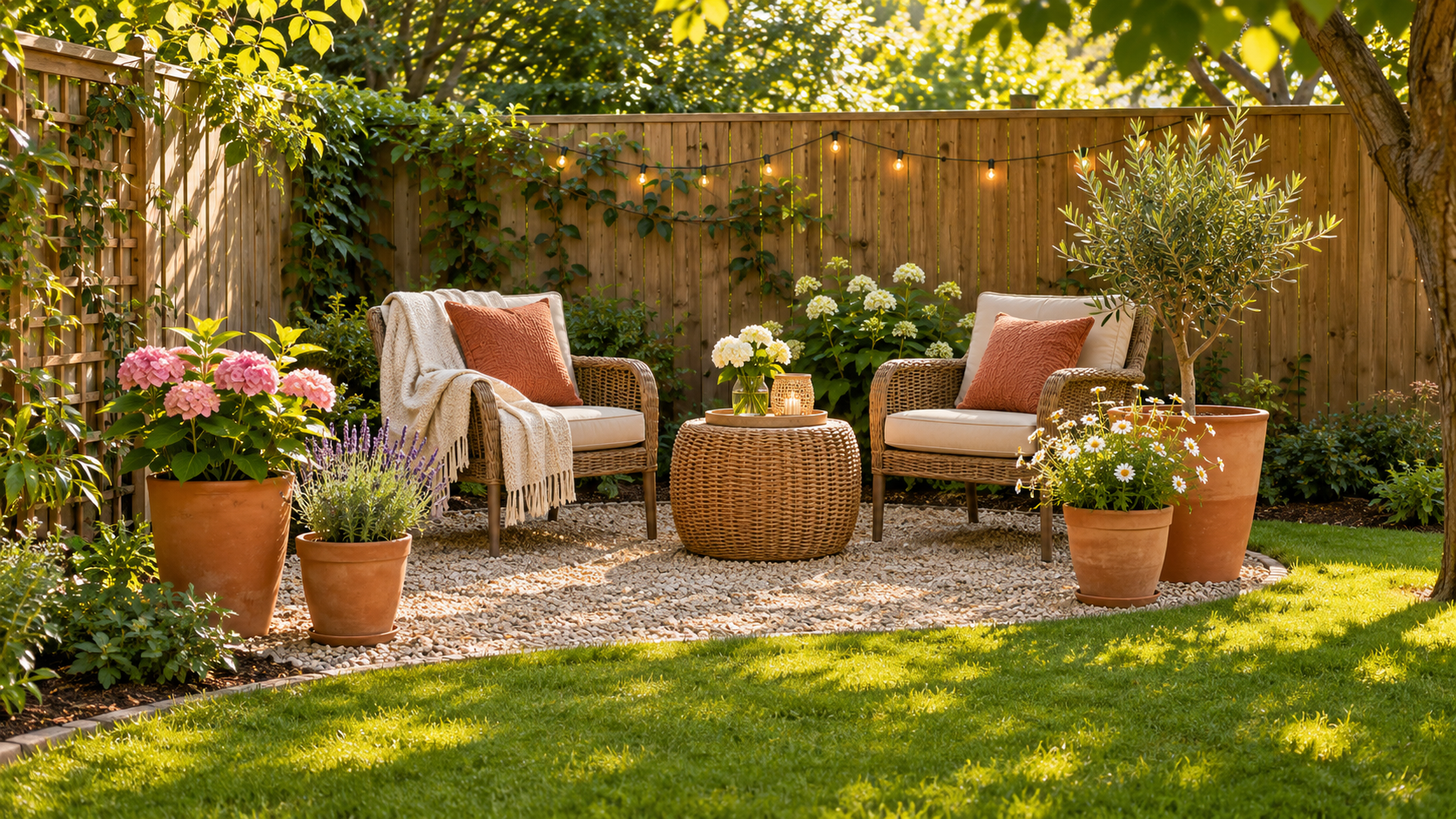
Cover image: AI-generated concept illustration, not a photograph of an actual property.
A beautiful backyard photo rarely shows the trip to buy missing hardware, the puddle after a storm or the awkward route to the garden tap. Before copying a DIY makeover, decide what would make your own outdoor space more useful. A modest change that solves a daily irritation can be worth more than an ambitious feature you rarely use.
Pick one job for the space
Start with a specific purpose: somewhere to eat breakfast, a place to grow herbs, or a comfortable seat near the back door. List what stops that activity today. It might be glare, clutter, an uneven surface or simply furniture arranged in the wrong place. This gives the project a testable goal and keeps a collection of attractive ideas from becoming an expensive shopping list.
Observe the spot at the times you expect to use it. A shaded morning corner may feel very different in late afternoon. Look after rain as well as on a sunny day. Avoid planning around the best photographable moment alone.
Test the arrangement before fixing it in place
Mark the proposed footprint with a removable material and move existing furniture into the arrangement. Open doors, pull chairs out and walk the routes you use while carrying things. Keep access to drains, taps and service equipment clear. If a layout only works when nobody moves, it needs another draft.
Freestanding planters or movable seating can make a useful first experiment. Assess stability, weight and the surface underneath rather than assuming that portable means suitable everywhere. A large planter filled with wet soil is a different proposition from its empty display version.
Treat lighting as an electrical decision
String lights can change the mood, but their installation needs more care than a decorative photo suggests. Use products rated for the intended outdoor conditions and follow their mounting and connection instructions. The U.S. Consumer Product Safety Commission’s home electrical checklist recommends ground-fault circuit-interrupter protection for outdoor outlets and checking outdoor extension cords for suitability and damage.
Do not improvise permanent wiring or run cords through routes where they will be crushed or tripped over. Ask a qualified electrician when the plan requires a new supply or you are unsure about the existing installation.
Separate decoration from construction
A painted pot is not the same project as a deck, fence, roofed structure or outdoor sink. Before digging, building or changing services, check the applicable local requirements, property restrictions and underground-service arrangements. A claim that somebody else’s project needed no permit is not permission for yours. Use appropriate professional help for structural, plumbing and electrical work.
Budget for the unphotogenic parts
Include fixings, surface preparation, delivery, waste removal and maintenance, not just the main material. Decide what you can finish properly in this round. Photograph the starting point, complete one change and use it for a week before adding another. The result should make the garden easier to enjoy, not leave you managing several half-finished projects.